
Find your path into real estate appraisal
Whether you're a student, changing careers or already licensed, there's a clear path forward. See what each credential lets you do, what it takes to earn it, and the programs that help you get there.
Residential or commercial?
Pick the path that matches the properties you want to work on. You can always expand later.
Residential path
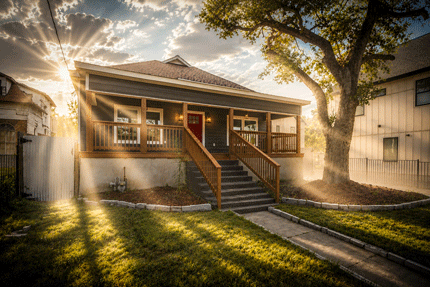
Licensed Residential, then Certified Residential. Value homes and one-to-four unit properties for buyers, sellers, lenders and courts. Grow into the SRA or AI-RRS designation.
Residential Path
Commercial path
Certified General. Value retail, industrial, agricultural and other property types. Most states require around 300 hours of qualifying education and 3,000 hours of experience, plus the National Certified General Appraiser Exam. Grow into the MAI or AI-GRS designation.
Commercial Path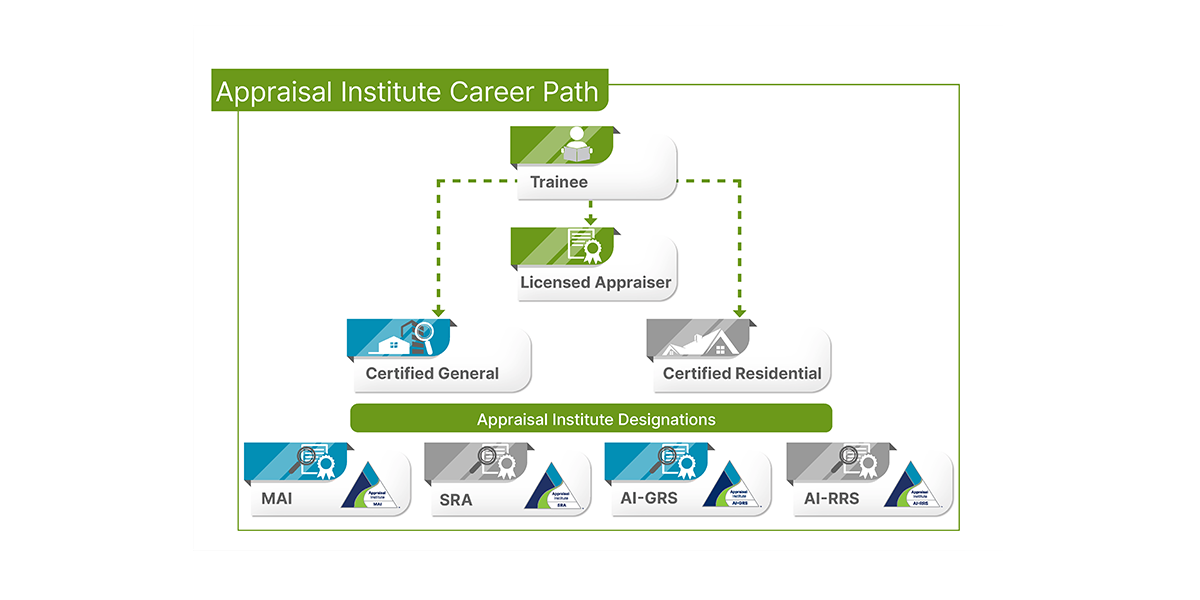
Appraisal Institute Career Path
Explore our comprehensive career path diagram, detailing the requirements for every level of appraisal and guiding you towards success in the industry.
Explore Your PathAIERF Scholarships
Offered since 2018 for AI Candidates for Designation, Associate Members and real estate students.
ADI® Scholarships
Delivered through the National Urban League's regional Entrepreneurship Centers.
AIERF PAREA Scholarship
$4,500 toward AI PAREA registration for Licensed Residential and Certified Residential.

Hear from new appraisers
AI PAREA graduates share how they earned their credential.
Angela Craig
Diego Ferrer
Ted Booker
Andrea Reveley

Find your first appraisal job
Browse jobs and internships from appraisal firms, post your resume for free and confidentially, and set up job alerts that match what you're looking for.
Visit the Career CenterCareer pathway FAQs
Quick answers for people starting out.
What education do I need to start?
At least 75 hours of qualifying education. That's Basic Appraisal Principles (30 hours), Basic Appraisal Procedures (30 hours) and the 15-Hour National USPAP Course. Many states also require the Supervisory Appraiser/Trainee Appraiser Course. Start as a trainee
What's the difference between licensed and certified?
A Licensed Residential appraiser can appraise one-to-four unit properties up to set value and complexity limits. A Certified Residential appraiser has no value or complexity limit for one-to-four units. A Certified General appraiser can appraise all property types.
What counts as a complex property?
One-to-four residential units are single-family homes and buildings with up to four dwellings. A complex unit has atypical ownership or market conditions, such as property owned by multiple unrelated parties. Everything else is non-complex.
Can I get experience without a supervisor?
Yes. AI PAREA is an alternative to the supervisor-trainee model for some or all of your Licensed Residential and Certified Residential experience, in states that accept it.
Are scholarships available?
Yes. AIERF, ADI® and AIERF PAREA scholarships help cover education and program costs. Explore scholarships
I'm a student. Where do I start?
Join as a Student Affiliate. It's free and gives you access to Appraisal Institute resources.
Explore Career Pathways
Programs and resources for every stage of your career.

Next Generation Appraisers
Free student membership, scholarships and resources for students and recent grads.
Explore Student Resources
Appraiser Development Initiative®
Scholarships, mentorship and community for people new to appraisal.
Explore ADI
PAREA | Apprenticeship Program
Earn experience hours through simulated appraisals and a dedicated mentor.
Explore AI PAREA
Licensure & Certification
What each credential covers, how to keep it, and where it can take you.
Compare CredentialsMembers get more
Whether you're exploring the profession or growing your practice, membership gives you education discounts, 24/7 Lum Library access, a Find an Appraiser listing and a national network of valuation professionals.
Join Now